Belts and chains keep modern engines synchronized and accessories spinning. When they wear, small noises and subtle drivability changes are often your only warning. This guide breaks down what each part does, the signs it needs attention, and how service plans actually prevent bigger repairs.
Serpentine Belt vs. Timing Belt vs. Timing Chain
A serpentine belt is the long, external belt that drives the alternator, power steering pump, A/C compressor, and often the water pump. It relies on a spring or hydraulic tensioner to keep grip without slipping.
A timing belt lives under the covers and keeps the crankshaft and camshaft in sync. Many engines are interference designs, so a failed timing belt can allow valves to contact pistons.
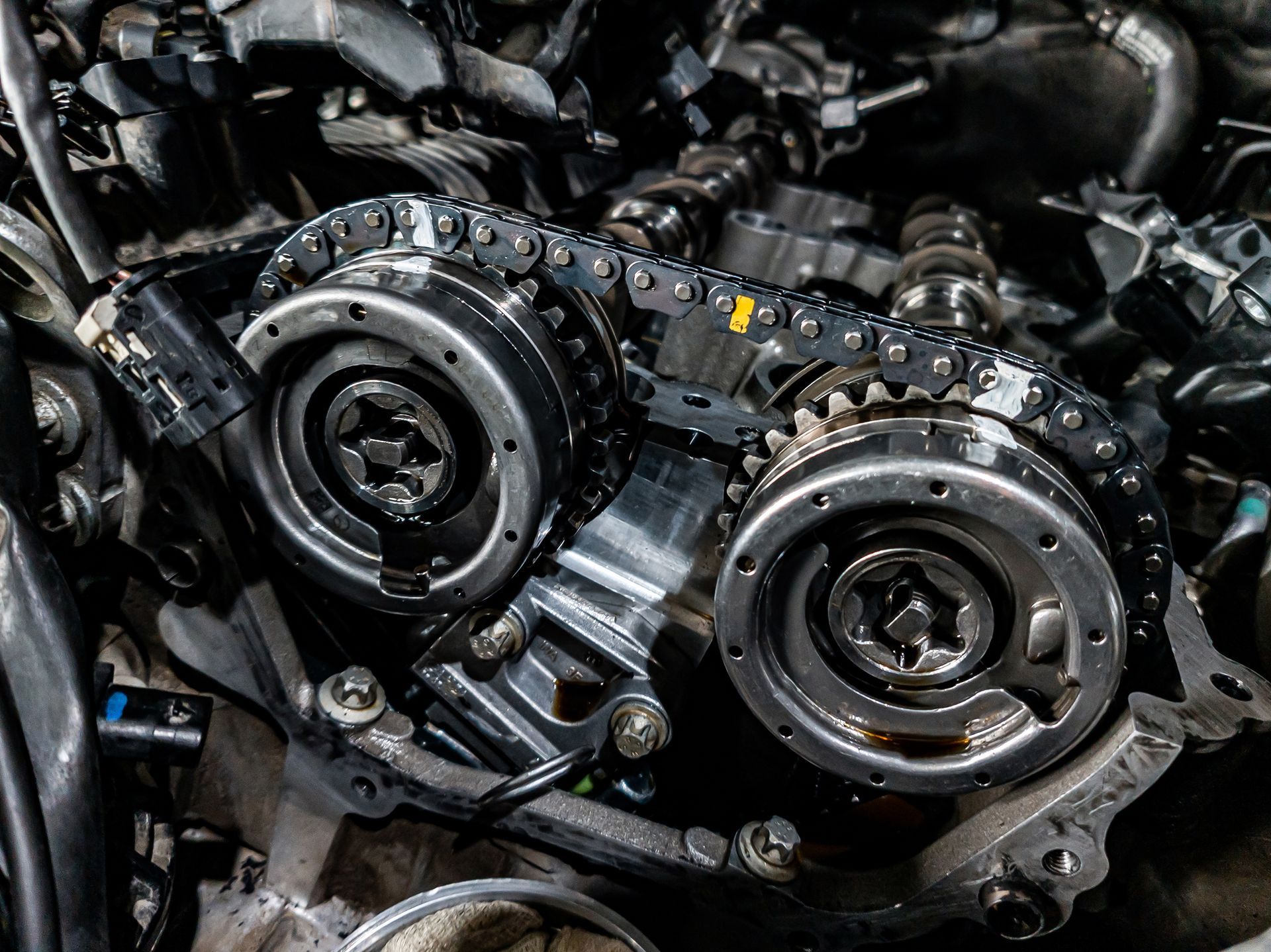
A timing chain performs the same function as a timing belt, but it is composed of metal links. Chains are durable, yet guides, tensioners, and oil quality determine their real lifespan.
How Each One Fails and What You Will Notice
Serpentine belts crack with age, glaze from heat, or stretch and slip. You might hear a chirp on cold starts, see dash lights from weak charging, or feel heavier steering at low speed.
Timing belts lose teeth, harden, or are contaminated by oil or coolant. Misfires on startup, a sudden stumble, or visible coolant near the pump area are common clues that the system is near its service window.
Timing chains stretch, guides wear, and hydraulic tensioners lose authority. A cold start rattle that lasts more than a moment, cam timing codes, or a drifting idle points to a chain system that needs attention.
Service Intervals and What Affects Them
Serpentine belts typically run 60,000 to 100,000 miles. Heat, pulleys out of alignment, and accessory bearing drag shorten that range. Inspect at every oil change and replace when cracks, fraying, or glazing appear.
Timing belts are usually due between 60,000 and 105,000 miles or 6 to 10 years, whichever comes first. Age matters as much as mileage. Short trips, oil seepage, and coolant leaks all push you toward the early end.
Timing chains are not “lifetime” in the real world. Extended oil intervals, low oil level, or the wrong oil specification accelerate stretch and guide wear. Engines that experience frequent cold starts or prolonged idling often exhibit chain issues earlier than expected.
What Proper Service Includes
A serpentine service replaces the belt and inspects or replaces the tensioner and idler pulleys. Accessory pulleys are spun and checked for noise or wobble. If the belt glazed because a pulley was dragging, that bearing needs to be addressed, or the new belt will slip again.
A timing belt service is a kit job. It should include a new belt, tensioner, idler pulleys, and, on many engines, a water pump. Fresh coolant is added, and cam and crank seals are inspected and replaced if they show seepage. The goal is to renew every part that could shorten the life of the new belt.
A timing chain service targets the worn components. Common replacements include primary and secondary chains, guides, shoes, and hydraulic tensioners. The technician verifies oil feed passages are clean and sets cam timing precisely with locking tools before reassembly.
Myths That Lead to Expensive Repairs
“Chains never need service.” Chains last longer than belts, but oil quality decides their fate. Running low or stretching oil intervals invites guide wear and tensioner collapse.
“A small squeal is normal.” Squeal is the sound of friction and heat. A slipping serpentine belt can overheat an accessory pulley and leave you with a sudden charging or steering loss.
“If it broke, just replace the belt.” When a timing belt fails, valves may be bent in interference engines. A compression or leak-down test confirms internal health before new parts go on. Skipping this step risks repeating the job.
Simple Ways to Extend Belt and Chain Life
Use the oil specification on the cap or in the manual and change it on time. Clean oil keeps hydraulic tensioners happy and chain guides alive.
Fix small leaks quickly. Oil on a timing belt or chain guide accelerates wear, and coolant at the water pump can contaminate a belt.
Listen to a cold start. A brief chirp from an accessory belt is a prompt to inspect tension and pulleys. A sustained chain rattle means schedule a visit soon.
Get Professional Belt and Chain Service in Sherman Oaks and Santa Monica with The Haus Auto
If you hear new belt noises, see leak traces, or notice a cold start rattle, visit our Sherman Oaks or Santa Monica shop. Our technicians measure wear, set timing with the right tools, and replace supporting parts so the repair lasts.
Schedule your appointment and keep your engine smooth, quiet, and reliable for the miles ahead.